
Bringing home an 8-week-old puppy is exciting, but choosing the right food can be overwhelming. Young puppies have unique nutritional needs, and the wrong choice can affect their growth, digestion, and even behavior. Many new owners worry about transitioning from milk to solids, supporting brain development, and finding foods that are both appealing and gentle on tiny stomachs.
This guide breaks down the best dog food options for 8-week-old puppies, including dry kibble, wet food, weaning formulas, and high-calorie supplements. We’ll help you understand the differences, highlight the strengths of each product, and offer practical advice so you can confidently support your puppy’s healthy start.


Top 8 Best Dog Foods For 8-week-old Puppies
Finding the right Dog Foods For 8-week-old Puppies isn’t always straightforward. To simplify the process, we compared leading products and shortlisted the ones that truly stand out.
1. PetAg Esbilac 2nd Step Puppy Weaning Food Powder
Transitioning puppies from milk to solid food can be a delicate process, and a gentle weaning formula helps avoid digestive upset. For puppies just starting to lap from a bowl, a dedicated weaning food is essential to bridge the nutritional gap between milk and regular puppy food.
PetAg Esbilac 2nd Step is designed specifically for this stage, offering a smooth transition for puppies moving off mother's milk or milk replacer. It's best for breeders, foster caregivers, or anyone raising litters who want a reliable, easy-to-digest option for puppies aged 4–8 weeks.
- Powdered formula: Mixes easily with warm water for a soft, palatable meal
- DHA enrichment: Supports visual and cognitive development during a critical growth window
- Natural milk protein: Gentle on sensitive puppy stomachs and easy to digest
Compared to standard dry kibble or wet food, this weaning formula prioritizes gradual adaptation and digestive comfort. The main tradeoff is that it requires preparation and isn't a long-term solution past the early weeks.
- Smooth transition from milk
- Supports brain development
- Easy to digest
- Customizable consistency
- Ideal for young litters
- Requires mixing before use
- Not suitable for older puppies
2. Blue Buffalo Baby Blue Natural Dry Puppy Food Chicken
Young puppies need balanced nutrition to fuel growth and brain development, and choosing the right dry food can set the foundation for lifelong health. Many owners want a formula that supports learning and play while being gentle on developing systems.
Blue Buffalo Baby Blue Chicken Recipe stands out for its focus on cognitive support, thanks to DHA and antioxidant-rich ingredients. It's a strong choice for families who want a natural, chicken-first dry food that avoids common fillers and by-products.
- DHA inclusion: Promotes healthy brain and vision development
- Real chicken as first ingredient: Provides quality protein for muscle growth
- No corn, wheat, or soy: Reduces risk of food sensitivities in young puppies
Compared to budget dry foods, this formula prioritizes wholesome ingredients and developmental support. The tradeoff is a higher price point and a focus on chicken, which may not suit all dietary preferences.
- Supports brain and vision
- No by-product meals
- Antioxidant-rich bits
- Wholesome ingredients
- Gentle on digestion
- Higher cost than basic options
- Chicken-based only
3. Pedigree Puppy Dry Food Steak & Vegetable
Budget-conscious puppy owners still want to provide complete nutrition, but may worry about sacrificing quality. Affordable dry foods can meet basic needs, but it's important to choose one specifically formulated for puppies.
Pedigree Puppy Dry Food offers a cost-effective way to cover essential vitamins, minerals, and protein for growing pups. It's well-suited for families with multiple puppies or those seeking a reliable, everyday dry food without premium pricing.
- 36 vitamins and minerals: Ensures balanced nutrition for healthy growth
- High-quality protein: Supports muscle development in active puppies
- Immune system support: Fortified to help puppies build natural defenses
Compared to premium or specialty foods, this option prioritizes affordability and broad nutritional coverage. The tradeoff is less focus on specialty ingredients and fewer options for puppies with sensitivities.
- Affordable for daily feeding
- Complete and balanced
- Supports immune health
- Easy to store
- Widely available
- Contains more fillers
- Limited specialty ingredients
4. PetAg Dyne High Calorie Liquid Supplement 32 oz

Some puppies need extra calories due to high activity, recovery, or being underweight. Standard puppy foods may not provide enough concentrated energy for these situations, making a liquid supplement a practical addition.
PetAg Dyne High Calorie Liquid is ideal for puppies needing a nutritional boost, whether due to growth spurts, illness, or increased demands. It's especially helpful for breeders, rescues, or owners of very active or recovering pups.
- High-calorie formula: Delivers extra energy without large meal volumes
- Palatable vanilla flavor: Encourages intake even in picky or weak puppies
- Flexible use: Can be fed directly or poured over food for added calories
Compared to dry or wet foods, this supplement prioritizes calorie density and ease of administration. The tradeoff is that it should not replace balanced meals and is best used as a targeted supplement.
- Boosts calorie intake
- Easy to administer
- Good for picky eaters
- Supports recovery
- Flexible feeding options
- Not a complete diet
- High fat content
5. PetAg Dyne High Calorie Liquid Supplement 16 oz

When a puppy needs extra calories but only in small amounts, a compact liquid supplement can prevent waste and ensure freshness. This is especially useful for single-puppy households or those supplementing alongside regular meals.
PetAg Dyne 16 oz offers the same high-calorie benefits in a smaller bottle, making it convenient for occasional or short-term use. It's a good fit for owners who want to support growth or recovery without committing to a large container.
- Concentrated energy: Supports puppies with increased caloric needs
- Small bottle size: Reduces waste for infrequent supplementation
- Highly palatable: Encourages intake in finicky or recovering puppies
Compared to larger bottles or bulk supplements, this size prioritizes convenience and freshness. The tradeoff is a higher cost per ounce and limited use for larger litters.
- Convenient small size
- Easy to store
- Good for single puppies
- Same calorie boost as larger size
- Less value for bulk use
- Not a full meal replacement
6. Pedigree Puppy Soft Wet Dog Food Variety Pack
Puppies can be selective eaters, and offering variety helps keep meals interesting while ensuring balanced nutrition. Wet food is also easier for young puppies to chew and digest, making it a practical choice during the transition from milk.
Pedigree’s Soft Wet Food Variety Pack provides multiple flavors and textures, reducing mealtime boredom and increasing the chances of acceptance. It's ideal for owners with picky puppies or those wanting to mix wet and dry foods for added appeal.
- Multiple flavors: Helps identify preferences and encourages eating
- DHA and calcium: Supports brain, teeth, and bone development
- No artificial flavors: Minimizes unnecessary additives for sensitive puppies
Compared to single-flavor foods, this pack prioritizes variety and palatability. The tradeoff is more packaging and a higher cost per serving compared to bulk dry food.
- Multiple flavors included
- Easy to chew
- Supports healthy development
- No added sugar
- Can be used as topper
- More packaging waste
- Higher cost per meal
7. PetAg Dyne High Calorie Liquid Supplement 1 Gallon

Large litters or kennels often need to supplement multiple puppies at once, making bulk-sized nutritional supplements more practical. This ensures consistent calorie delivery without frequent repurchasing.
PetAg Dyne 1 Gallon is designed for breeders, rescues, or anyone managing several puppies with increased caloric needs. It provides the same concentrated nutrition as smaller bottles but in a cost-effective, large format.
- Bulk quantity: Suitable for frequent or multi-puppy supplementation
- High calorie density: Supports growth and recovery in demanding situations
- Trusted brand: Backed by a reputation for pet wellness
Compared to smaller bottles, this size prioritizes value and convenience for high-volume use. The tradeoff is storage space and a shorter shelf life after opening.
- Economical for large groups
- Reduces repurchasing
- Consistent nutrition
- Trusted supplement formula
- Bulky to store
- Shorter shelf life once opened
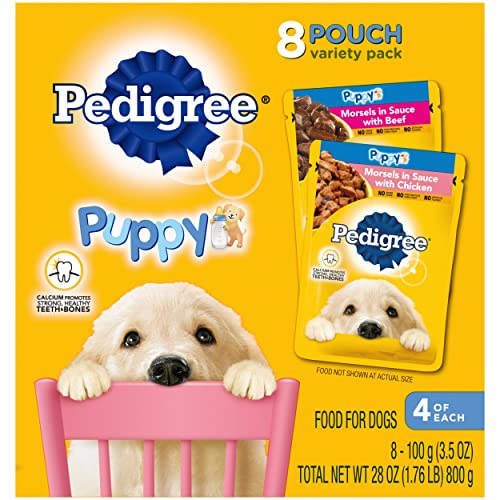
8. Pedigree Puppy Food Morsels in Sauce Pouches

Wet food can be messy, especially with young puppies learning to eat from a bowl. Convenient pouch packaging helps minimize waste and makes portioning easier for busy owners.
Pedigree Puppy Morsels in Sauce come in single-serve pouches, offering a soft, protein-rich meal with added DHA and calcium. They're a good option for owners seeking convenience, easy cleanup, and balanced nutrition in a wet format.
- Steam-cooked recipe: Maintains flavor and texture for picky eaters
- Pre-portioned pouches: Reduces leftovers and simplifies feeding
- DHA and calcium: Supports healthy brain and bone development
Compared to canned or tray-based wet foods, these pouches prioritize convenience and portion control. The main tradeoff is a slightly higher cost per serving and more packaging waste.
- Easy single-serve pouches
- No messy leftovers
- Supports healthy growth
- Soft texture for young puppies
- More packaging per meal
- Not ideal for bulk feeding
Buying Guide: How to Choose the Best Dog Food for 8-Week-Old Puppies
Selecting food for an 8-week-old puppy is a technical decision that impacts growth, digestion, and long-term health. Buyers must weigh the nutritional needs of very young dogs, the transition from milk to solids, and the practicalities of feeding and cleanup. Many new owners assume all puppy foods are the same or that any "puppy" label is sufficient, but the reality is more nuanced.
- Weaning formulas vs. standard puppy foods: Weaning formulas are designed for puppies transitioning off milk, while dry and wet puppy foods are for those ready for solid meals.
- Dry, wet, and supplement options: Each type offers different benefits for palatability, calorie density, and ease of feeding.
- Nutritional completeness: Not all products are complete diets—supplements and weaning foods may require pairing with other foods.
- Calorie density and portion size: High-calorie supplements help underweight or high-energy puppies, but should not replace balanced meals.
- Ingredient sensitivities: Some puppies react poorly to fillers or certain proteins; ingredient lists matter.
- Packaging and storage: Bulk sizes suit large litters, while pouches and small bottles are better for single puppies or convenience.
- Common misunderstandings: Many buyers overestimate the age at which puppies can handle dry kibble or underestimate the need for DHA and calcium during early growth.
Choosing Between Weaning Formulas and Regular Puppy Foods
The transition from mother's milk to solid food is a critical stage. Weaning formulas are specifically designed for puppies just starting to eat on their own, offering a gentle introduction that supports digestion and development. Once puppies are confidently eating from a bowl, regular dry or wet puppy foods become appropriate.
- Weaning formulas: Best for puppies 4–8 weeks old, especially in litters or foster care
- Regular puppy foods: Suitable once puppies are fully lapping and chewing
Dry vs. Wet Puppy Food: What Matters Most
Dry kibble is convenient and shelf-stable, while wet food is easier to chew and often more palatable for young puppies. Wet food or pouches can also be used as toppers to encourage eating or add hydration.
- Dry food: Good for gradual transition to adult diets, easy storage
- Wet food: Softer texture, higher moisture, often preferred by picky eaters
When to Use High-Calorie Supplements
Supplements like high-calorie liquids are not complete diets but can be essential for underweight, recovering, or very active puppies. They provide concentrated energy without requiring large meal volumes.
- Best for: Underweight, sick, or highly active puppies; not for routine feeding of healthy pups
- How to use: As a topper or direct supplement, not as a meal replacement
Portion Sizes, Packaging, and Storage
Bulk packaging is practical for breeders or multi-puppy homes, while smaller bottles and pouches reduce waste for single-puppy households. Consider your storage space and how quickly you’ll use the product.
- Bulk sizes: Cost-effective for large groups, but need proper storage
- Single-serve pouches/bottles: Minimize waste and maintain freshness
Final Buying Advice
Choosing the right food for your 8-week-old puppy means matching product type to your puppy’s stage, health, and your household needs. Focus on nutritional completeness, ease of feeding, and your puppy’s preferences.
- Start with weaning formulas if your puppy is just leaving milk
- Transition to dry or wet puppy food once your puppy is confidently eating solids
- Use high-calorie supplements only for specific needs, not as a main diet
- Choose packaging size based on the number of puppies and storage space
- Read ingredient lists to avoid fillers and ensure DHA and calcium are included
FAQ For Dog Foods For 8-week-old Puppies
1. How do I know if my 8-week-old puppy is ready for dry food?
2. Should I choose wet or dry food for my 8-week-old puppy?
3. When is a weaning formula necessary?
4. Are high-calorie supplements safe for all puppies?
5. How important is DHA in puppy food?
6. Can I mix wet and dry puppy food?
7. How do I store bulk puppy food or supplements?

James Vega
Related Posts
- Top 8 Best Dog Bowls For Labradors
- Top 8 Best Dog Food For Senior Labs
- Top 5 Best Small Dog Dry Foods
- Best Dog Foods For Beagles: Top Picks
- Top 5 Best Dog Food Additives
- Top 5 Best Dog Foods For Shedding Labs
- Best Dog Foods For Dogs With Itchy Skin: Top Picks
- Best Dog Food Mats: Top Picks
- Best Quality Dog Kibble Brands: Top Picks
- Best Food Baits: Top Picks
- Top 5 Best Fresh Dog Food For Small Dogs
- Top 8 Best Skin Care Dog Foods
- Top 6 Best Dog Foods For Dog Allergies & Itching
- Top 6 Best Dog Foods For Diabetic Dogs
- Top 7 Best Grain-free Puppy Foods
- Best Dog Foods For American Bulldogs: Top Picks
- Top 10 Best Raised Dog Food Bowls
- Best Dog Food For Frenchie Puppies: Top Picks
- Best Dog Food For Mini Dachshunds: Top Picks
- Best Cat Food Mats: Top Picks